Spring/Early Summer 2026
E
arly spring
marks one
of the most important transition
periods in bass fishing.
As daylight increases and
water temperatures slowly
rise, bass begin leaving
their wintering areas and
moving toward shallower
feeding zones. These
fish know that warming
conditions signal the
approach of the spawn,
and they begin feeding
more aggressively to
prepare.
For anglers, this seasonal shift offers an excellent opportunity to intercept bass during their move toward spawning areas. However, changing weather patterns can slow or accelerate this migration, and anglers must adjust their tactics accordingly. Understanding how bass react to warming water and choosing the right presentations can make the difference between a slow day and a productive one.
READING THE EARLY SPRING TRANSITION
As water temperatures begin to rise, bass follow the warming trend and move closer to shallow water. Their food sources are making the same move, and bass know they must follow if they want to feed.
Stable weather often accelerates this movement, but cold fronts can temporarily push bass back to deeper staging areas. When conditions stabilize again, bass reposition and begin feeding in areas where forage is present.
During this time, bottom composition and available forage may change as bass move shallower. Successful anglers pay attention to these changes and adjust their bait selection accordingly.
TUBE TACTICS FOR SHALLOW MOVING BASS
As bass move toward shallow water, they begin encountering weeds and varying bottom structures. One of the first baits many anglers turn to early in the season is the tube.
The tube has been a reliable bass bait since the mid-1970s, and nearly 50 years later it remains one of the most effective early season presentations. With modern rigging options, anglers can fish tubes in several different ways depending on conditions.
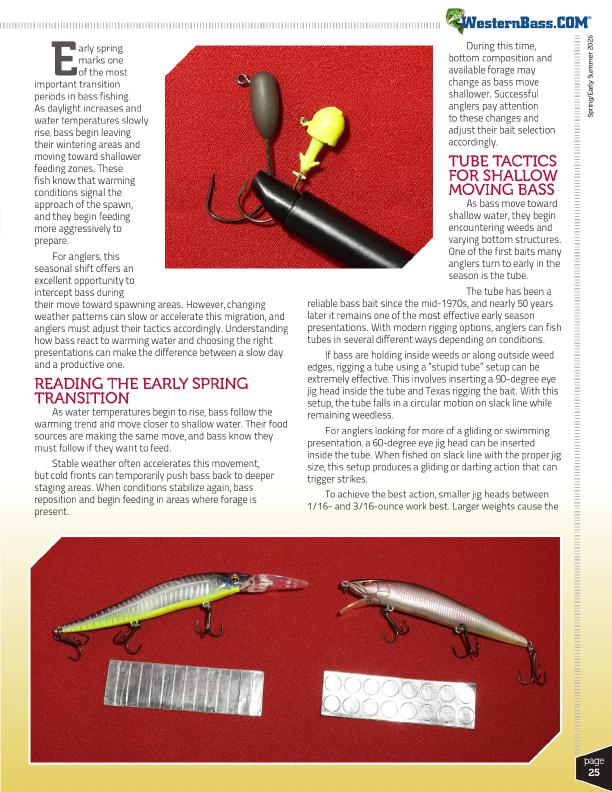
If bass are holding inside weeds or along outside weed edges, rigging a tube using a “stupid tube” setup can be extremely effective. This involves inserting a 90-degree eye jig head inside the tube and Texas rigging the bait. With this setup, the tube falls in a circular motion on slack line while remaining weedless.
For anglers looking for more of a gliding or swimming presentation, a 60-degree eye jig head can be inserted inside the tube. When fished on slack line with the proper jig size, this setup produces a gliding or darting action that can trigger strikes.
To achieve the best action, smaller jig heads between 1/16- and 3/16-ounce work best. Larger weights cause the
®
page 25