Fall 2026
S
pinnerbait selection can look simple hanging on a
tackle shop wall or in the virtual section of an online
shop. It seems basic – pick a weight, choose a blade combination, find a skirt color that fits the water and go fishing.
But that isn’t the case. Two spinnerbaits stamped ½-ounce can behave like two completely different lures once they hit the water.
The weight printed on the package only describes one part of the bait. Blade shape and size determine resistance, lift, flash and vibration. Wire diameter changes how vibration travels through the bait. Head design affects balance and how the spinnerbait moves through cover. Even skirt bulk and trailer choice can determine whether a bait wants to rise, stay down or fight against the retrieve.
Understanding those differences makes spinnerbait selection less about choosing a favorite and more about building the right combination for the water you’re trying to fish.
BLADE SHAPE CHANGES MORE THAN FLASH
The three primary spinnerbait blade shapes are willow, Colorado and Indiana, and each moves water differently.
A willow blade is long and narrow. It produces substantial flash with relatively little resistance, making it easier to retrieve quickly and generally easier to keep deeper than a comparable bait equipped with larger, rounder blades.
A Colorado blade is wider and rounder. It displaces more water, produces stronger vibration and creates more lift.
That makes it particularly useful for slower presentations and situations where visibility is reduced.
An Indiana blade falls between the two, providing a compromise between the flash and lower resistance of a willow and the vibration of a Colorado.
That’s why changing blades can alter how the entire spinnerbait fishes even when head weight remains exactly the same.
BLADE COMBINATIONS CHANGE THE PERSONALITY
Pairing blades gives anglers another way to tune the presentation.
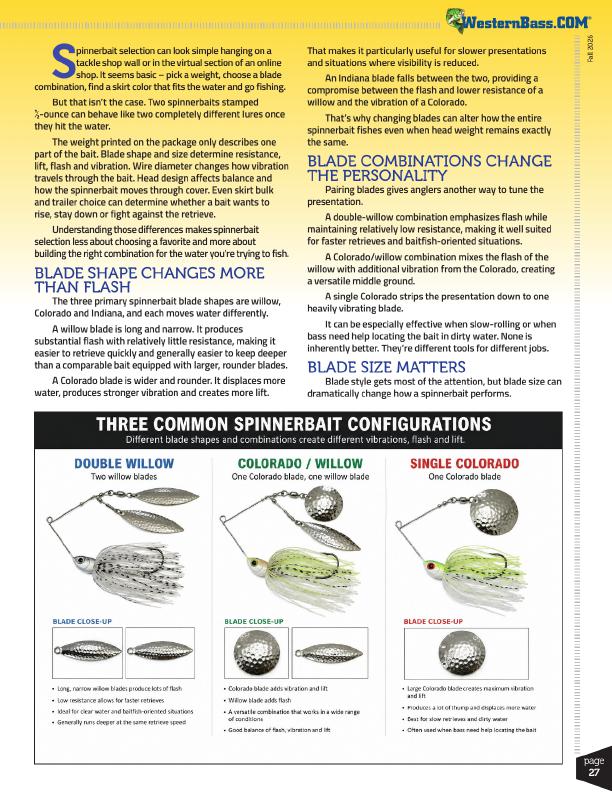
A double-willow combination emphasizes flash while maintaining relatively low resistance, making it well suited for faster retrieves and baitfish-oriented situations.
A Colorado/willow combination mixes the flash of the willow with additional vibration from the Colorado, creating a versatile middle ground.
A single Colorado strips the presentation down to one heavily vibrating blade.
It can be especially effective when slow-rolling or when bass need help locating the bait in dirty water. None is inherently better. They’re different tools for different jobs.
BLADE SIZE MATTERS
Blade style gets most of the attention, but blade size can dramatically change how a spinnerbait performs.
®
page
27