Fall 2026
C
alifornia water managers first
discovered golden mussels in
the Sacramento-San Joaquin River Delta in October 2024, marking the
first detection of the invasive species in
North America. Less than two years later,
their known range in California stretches
nearly 500 miles – from the Sacramento
region south to Sweetwater Reservoir
near the U.S.-Mexico border.
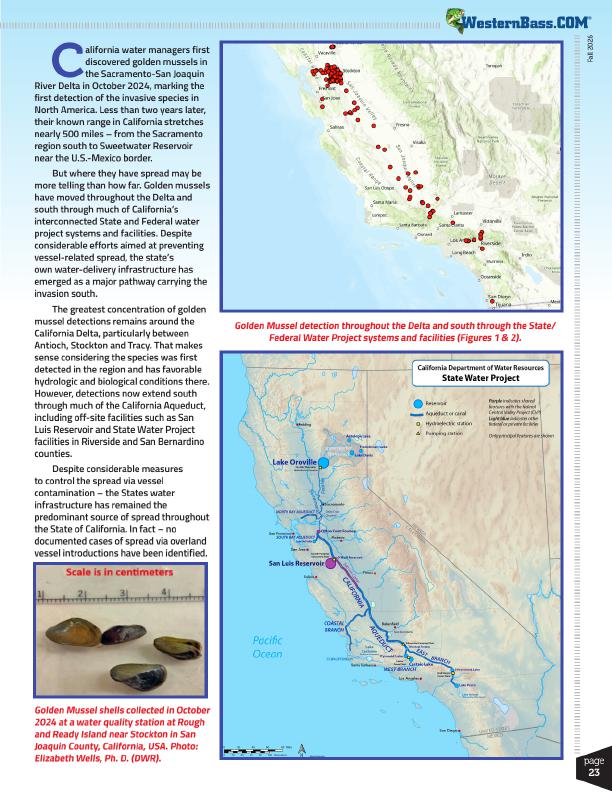
But where they have spread may be more telling than how far. Golden mussels have moved throughout the Delta and south through much of California’s interconnected State and Federal water project systems and facilities. Despite considerable efforts aimed at preventing vessel-related spread, the state’s own water-delivery infrastructure has emerged as a major pathway carrying the invasion south.
The greatest concentration of golden mussel detections remains around the California Delta, particularly between Antioch, Stockton and Tracy. That makes sense considering the species was first detected in the region and has favorable hydrologic and biological conditions there. However, detections now extend south through much of the California Aqueduct, including off-site facilities such as San Luis Reservoir and State Water Project facilities in Riverside and San Bernardino counties.
Despite considerable measures to control the spread via vessel contamination – the States water infrastructure has remained the predominant source of spread throughout the State of California. In fact – no documented cases of spread via overland vessel introductions have been identified.
Golden Mussel detection throughout the Delta and south through the State/
Federal Water Project systems and facilities (Figures 1 & 2).
®
Golden Mussel shells collected in October 2024 at a water quality station at Rough and Ready Island near Stockton in San Joaquin County, California, USA. Photo: Elizabeth Wells, Ph. D. (DWR).
page
23