Fall 2025
®
bass love ambushing bait from below. If shad are in 30-feet, I’ll look for bass directly beneath them. Wind and surface chop can make things even better, triggering activity and pushing bait into areas like rock walls, main lake pockets, and drains. It’s simple: follow the bait, and you’ll usually find the bass.
WB: What is the key to finding those big schools of fish?
SILVA: The key is time on the graph. I often spend three hours idling for every hour I fish. It might seem boring, but once you find a solid school, it’s often fast action. Schools usually relate to structure they’re not out aimlessly in open water. I focus on contour lines, ledges, and areas within 100-yards of shore. That’s where the bait and bass like to set up.
WB: Say the wind picks up the morning of the event and you had found fish a long way from the ramp. What do you do, make the dangerous trip, try to find fish close, or launch somewhere else?
SILVA: Any lake can become dangerous in the wrong conditions, and some can be downright deadly. We fish out of kayaks, and in tough weather, the odds are already
stacked against us. No tournament result is worth risking your safety. When high winds are forecast, I always identify protected areas I can pivot to. Before the event, I check wind direction, timing of gusts, and plan accordingly. Running long distances in bad conditions isn’t just unsafe—it’s inefficient. Unless you are spot-locked, fishing effectively in wind is nearly impossible from a kayak. The smart move is to adapt your game plan and fish areas where you can stay safe and still be competitive.
WB: What advice would you give your fellow kayakers to be safe while fishing?
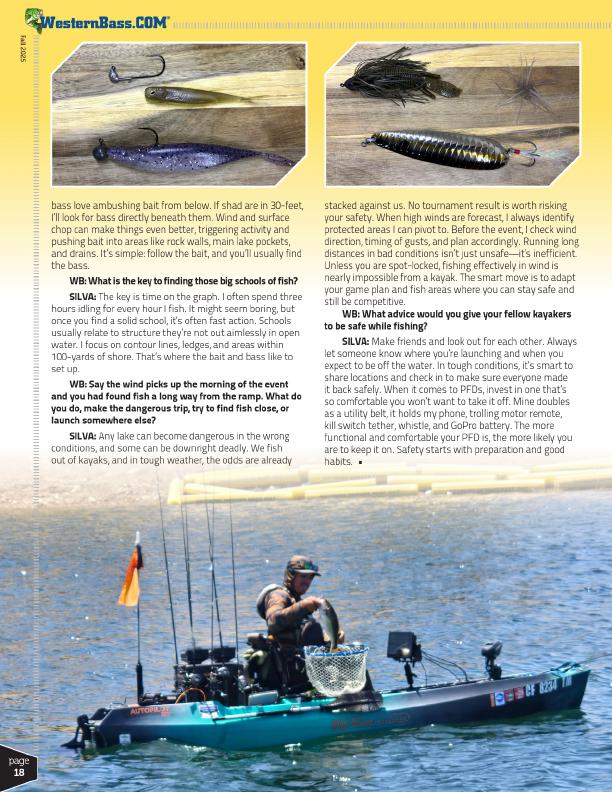
SILVA: Make friends and look out for each other. Always let someone know where you’re launching and when you expect to be off the water. In tough conditions, it’s smart to share locations and check in to make sure everyone made it back safely. When it comes to PFDs, invest in one that’s so comfortable you won’t want to take it off. Mine doubles as a utility belt, it holds my phone, trolling motor remote, kill switch tether, whistle, and GoPro battery. The more functional and comfortable your PFD is, the more likely you are to keep it on. Safety starts with preparation and good habits. •
page
18