Spring 2025
®
N
o matter how many soft plastic baits are out
on the market or in your tacklebox, they are
worthless without a good hook. Fishhooks are a key item to a bass fisherman’s tacklebox and no
longer is it as simple as saying, “I need some hooks,” so let’s
breakdown the different styles of hooks for fishing soft
plastics for bass.
The hook itself has developed and evolved over the years and now these super sharp and strong hooks can help increase your hook up ratio, along with allowing your plastic baits to move more naturally in the water. Hooks come in a wide range of styles, sizes and colors and each one of these hooks has a specific plastic bait and fishing application that it will shine in.
There are three core groups that a hook can fall into:
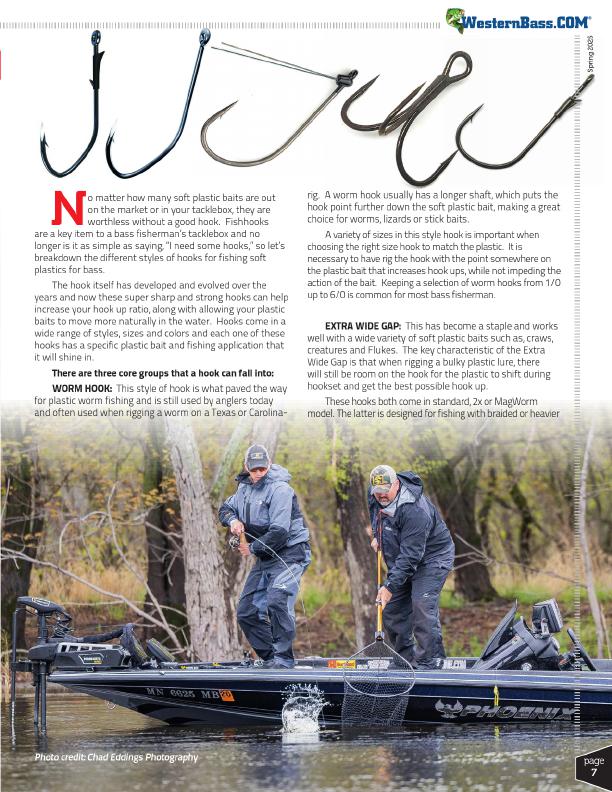
WORM HOOK: This style of hook is what paved the way for plastic worm fishing and is still used by anglers today and often used when rigging a worm on a Texas or Carolina-
rig. A worm hook usually has a longer shaft, which puts the hook point further down the soft plastic bait, making a great choice for worms, lizards or stick baits.
A variety of sizes in this style hook is important when choosing the right size hook to match the plastic. It is necessary to have rig the hook with the point somewhere on the plastic bait that increases hook ups, while not impeding the action of the bait. Keeping a selection of worm hooks from 1/0 up to 6/0 is common for most bass fisherman.
EXTRA WIDE GAP: This has become a staple and works well with a wide variety of soft plastic baits such as, craws, creatures and Flukes. The key characteristic of the Extra Wide Gap is that when rigging a bulky plastic lure, there will still be room on the hook for the plastic to shift during hookset and get the best possible hook up.
These hooks both come in standard, 2x or MagWorm model. The latter is designed for fishing with braided or heavier
Photo credit: Chad Eddings Photography
page
7