®
Summer 2026
F
rom the get-go, fishing jigs and weights were
made of lead. This was a readily available
material, was inexpensive, and it was easy for manufacturers to melt down and pour into different sizes
and styles based on the jig or weight a fisherman needed.
There was a brief time frame, where brass sinkers were popular, especially when it came to Carolina-rigging, and some jigs were made of other materials, such as bismuth.
WHY TUNGSTEN CHANGED BASS FISHING
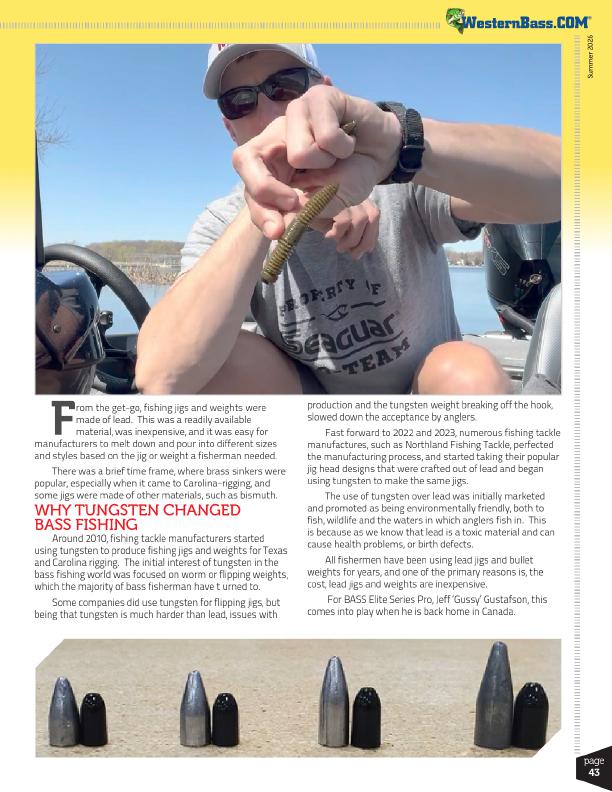
Around 2010, fishing tackle manufacturers started using tungsten to produce fishing jigs and weights for Texas and Carolina rigging. The initial interest of tungsten in the bass fishing world was focused on worm or flipping weights, which the majority of bass fisherman have t urned to.
Some companies did use tungsten for flipping jigs, but being that tungsten is much harder than lead, issues with
production and the tungsten weight breaking off the hook, slowed down the acceptance by anglers.
Fast forward to 2022 and 2023, numerous fishing tackle manufactures, such as Northland Fishing Tackle, perfected the manufacturing process, and started taking their popular jig head designs that were crafted out of lead and began using tungsten to make the same jigs.
The use of tungsten over lead was initially marketed and promoted as being environmentally friendly, both to fish, wildlife and the waters in which anglers fish in. This is because as we know that lead is a toxic material and can cause health problems, or birth defects.
All fishermen have been using lead jigs and bullet weights for years, and one of the primary reasons is, the cost, lead jigs and weights are inexpensive.
For BASS Elite Series Pro, Jeff ‘Gussy’ Gustafson, this comes into play when he is back home in Canada.
page 43