®
A
s our bass waters becomes more
pressured, we may have to do
something different to get bass to bite. Some anglers have turned towards
grabbing a glide bait. It can generate bigger
bites when needed, but it may not give you
the numbers you may be looking for.
I have thought about this and turned more to the finesse side of the coin, pushing the Ned envelope you could say to generate not only more bites from bass but bigger bites at the same time.
NED JIG HEADS
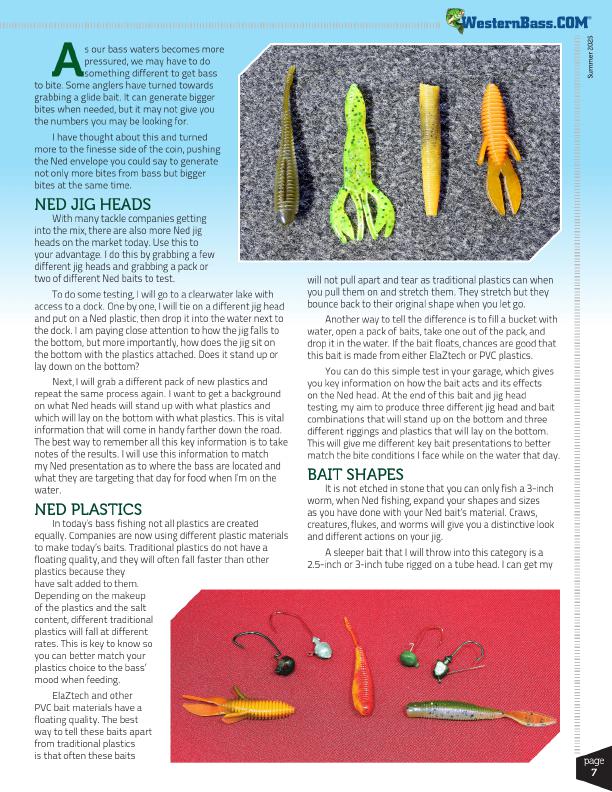
With many tackle companies getting into the mix, there are also more Ned jig heads on the market today. Use this to your advantage. I do this by grabbing a few different jig heads and grabbing a pack or two of different Ned baits to test.
To do some testing, I will go to a clearwater lake with access to a dock. One by one, I will tie on a different jig head and put on a Ned plastic, then drop it into the water next to the dock. I am paying close attention to how the jig falls to the bottom, but more importantly, how does the jig sit on the bottom with the plastics attached. Does it stand up or lay down on the bottom?
Next, I will grab a different pack of new plastics and repeat the same process again. I want to get a background on what Ned heads will stand up with what plastics and which will lay on the bottom with what plastics. This is vital information that will come in handy farther down the road. The best way to remember all this key information is to take notes of the results. I will use this information to match my Ned presentation as to where the bass are located and what they are targeting that day for food when I’m on the water.
NED PLASTICS
In today’s bass fishing not all plastics are created equally. Companies are now using different plastic materials to make today’s baits. Traditional plastics do not have a floating quality, and they will often fall faster than other plastics because they have salt added to them. Depending on the makeup of the plastics and the salt content, different traditional plastics will fall at different rates. This is key to know so you can better match your plastics choice to the bass’ mood when feeding.
ElaZtech and other PVC bait materials have a floating quality. The best way to tell these baits apart from traditional plastics is that often these baits
will not pull apart and tear as traditional plastics can when you pull them on and stretch them. They stretch but they bounce back to their original shape when you let go.
Another way to tell the difference is to fill a bucket with water, open a pack of baits, take one out of the pack, and drop it in the water. If the bait floats, chances are good that this bait is made from either ElaZtech or PVC plastics.
You can do this simple test in your garage, which gives you key information on how the bait acts and its effects on the Ned head. At the end of this bait and jig head testing, my aim to produce three different jig head and bait combinations that will stand up on the bottom and three different riggings and plastics that will lay on the bottom. This will give me different key bait presentations to better match the bite conditions I face while on the water that day.
BAIT SHAPES
It is not etched in stone that you can only fish a 3-inch worm, when Ned fishing, expand your shapes and sizes as you have done with your Ned bait’s material. Craws, creatures, flukes, and worms will give you a distinctive look and different actions on your jig.
A sleeper bait that I will throw into this category is a 2.5-inch or 3-inch tube rigged on a tube head. I can get my
Summer 2025
page
7