Spring/Early Summer 2026
F
ew soft plastic baits have gained as much
attention among serious bass anglers as the
Sakamata Shad. Designed by the Japanese tackle company Deps, the Sakamata Shad has become a favorite
for anglers targeting suspended fish and pressured bass,
especially with forward-facing sonar. The Sakamata Shad’s
forked tail and streamlined body create a quick darting
action that imitates a fleeing baitfish.
Many anglers fish the Sakamata Shad straight out of the package and catch plenty of fish; however, a few small rigging adjustments may alter the bait’s action just enough to make a standout presentation.
These subtle techniques influence how the lure glides, darts, and falls in the water column, and can provoke more aggressive reactions from bass, especially in clear water or when targeting suspended fish.
RIGGING THE SAKAMATA SHAD UPSIDE DOWN FOR MAXIMUM GLIDE
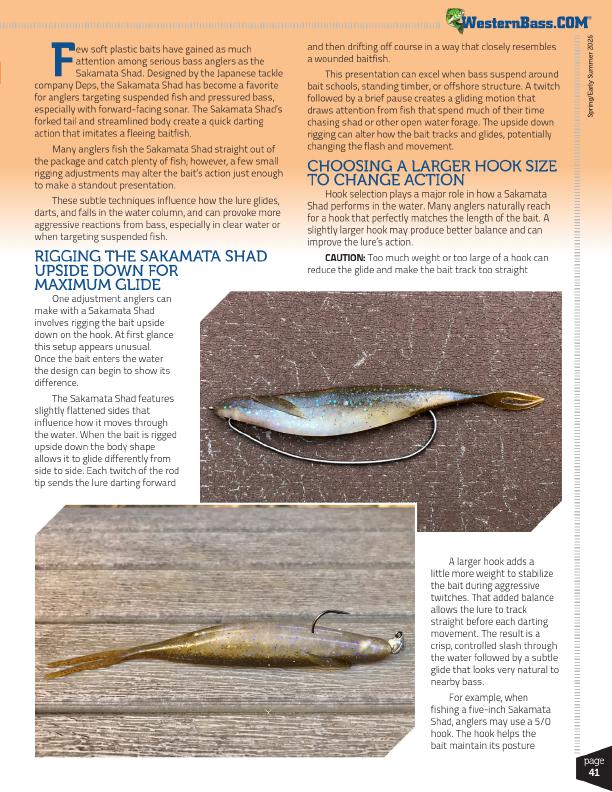
One adjustment anglers can make with a Sakamata Shad involves rigging the bait upside down on the hook. At first glance this setup appears unusual. Once the bait enters the water the design can begin to show its difference.
The Sakamata Shad features slightly flattened sides that influence how it moves through the water. When the bait is rigged upside down the body shape allows it to glide differently from side to side. Each twitch of the rod tip sends the lure darting forward
and then drifting off course in a way that closely resembles a wounded baitfish.
This presentation can excel when bass suspend around bait schools, standing timber, or offshore structure. A twitch followed by a brief pause creates a gliding motion that draws attention from fish that spend much of their time chasing shad or other open water forage. The upside down rigging can alter how the bait tracks and glides, potentially changing the flash and movement.
CHOOSING A LARGER HOOK SIZE TO CHANGE ACTION
Hook selection plays a major role in how a Sakamata Shad performs in the water. Many anglers naturally reach for a hook that perfectly matches the length of the bait. A slightly larger hook may produce better balance and can improve the lure’s action.
CAUTION: Too much weight or too large of a hook can reduce the glide and make the bait track too straight
®
A larger hook adds a little more weight to stabilize the bait during aggressive twitches. That added balance allows the lure to track straight before each darting movement. The result is a crisp, controlled slash through the water followed by a subtle glide that looks very natural to nearby bass.
For example, when fishing a five-inch Sakamata Shad, anglers may use a 5/0 hook. The hook helps the bait maintain its posture
page
41