®
B
ed fishing for bass during the spring spawn often becomes a game of showing fish something they have not seen yet.
Most anglers cycle through the same bed fishing baits
like tubes, creature baits, and stick worms, and on pressured
fish those presentations lose effectiveness. Less obvious
bed baits can create a different type of threat that triggers a
faster response.
As bass move shallow and commit to beds, they react to anything that disturbs the nest. Presenting a bait that behaves differently, stays in place, or represents a more direct threat can lead to more bites. The white jig, dead-sticking a minnow bait, dice or fuzzy baits, and bluegill swimbaits each offer a unique way to approach bed fish and stand out from traditional presentations.
THE WHITE JIG ADVANTAGE ON BEDS
A compact white jig gives anglers a clear visual reference in the bed. Instead of guessing when a fish has picked up the bait, the bright color allows anglers to see subtle movements and detect when a bass lifts the jig to remove it. Natural colors can be harder to see and cause missed subtle pickups. With the white jig, it is easy to detect when fish inhale, move or carry it. The visibility equals better hookset timing.
Why It’s Different: Unlike tubes, creature baits, and stick worms that move in and out of the bed, a jig stays planted in the center, creating a constant presence that forces bass to remove it.
Why This Works: The jig holds position in the center of the bed, with a vertical posture. It forces the fish to deal with something that remains in the nest. Rod tip shakes cause the skirt to pulse without moving the bait out of position, creating the appearance of something actively disturbing the nest. That constant presence often irritates the fish into removing it rather than just inspecting it.
Tip: This approach is especially effective on clean sand, gravel, and hard-bottom beds where maintaining position is critical.
DEAD-STICKING A MINNOW BAIT
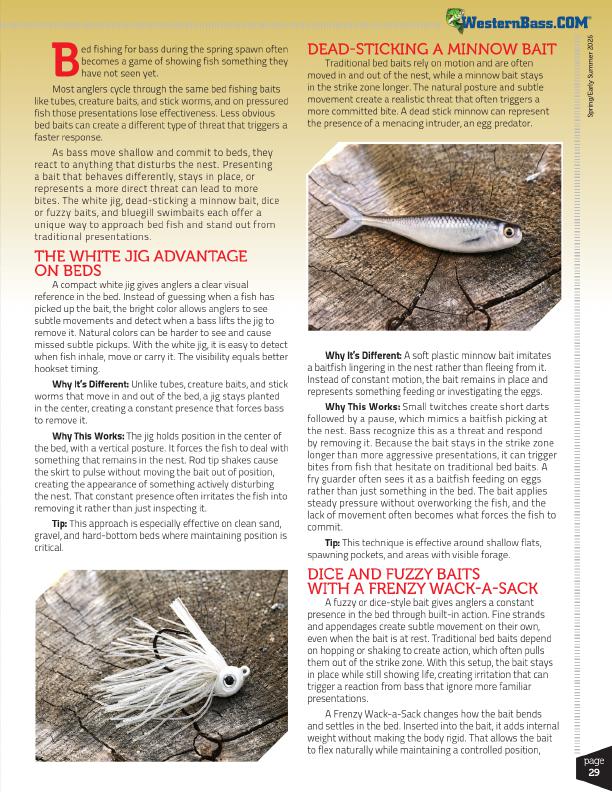
Traditional bed baits rely on motion and are often moved in and out of the nest, while a minnow bait stays in the strike zone longer. The natural posture and subtle movement create a realistic threat that often triggers a more committed bite. A dead stick minnow can represent the presence of a menacing intruder, an egg predator.
Why It’s Different: A soft plastic minnow bait imitates a baitfish lingering in the nest rather than fleeing from it. Instead of constant motion, the bait remains in place and represents something feeding or investigating the eggs.
Why This Works: Small twitches create short darts followed by a pause, which mimics a baitfish picking at the nest. Bass recognize this as a threat and respond by removing it. Because the bait stays in the strike zone longer than more aggressive presentations, it can trigger bites from fish that hesitate on traditional bed baits. A fry guarder often sees it as a baitfish feeding on eggs rather than just something in the bed. The bait applies steady pressure without overworking the fish, and the lack of movement often becomes what forces the fish to commit.
Tip: This technique is effective around shallow flats, spawning pockets, and areas with visible forage.
DICE AND FUZZY BAITS WITH A FRENZY WACK-A-SACK
A fuzzy or dice-style bait gives anglers a constant presence in the bed through built-in action. Fine strands and appendages create subtle movement on their own, even when the bait is at rest. Traditional bed baits depend on hopping or shaking to create action, which often pulls them out of the strike zone. With this setup, the bait stays in place while still showing life, creating irritation that can trigger a reaction from bass that ignore more familiar presentations.
A Frenzy Wack-a-Sack changes how the bait bends and settles in the bed. Inserted into the bait, it adds internal weight without making the body rigid. That allows the bait to flex naturally while maintaining a controlled position,
Spring/Early Summer 2026
page 29