Fall 2025
®
#1 MAKE THEM SHOW THEMSELVES:
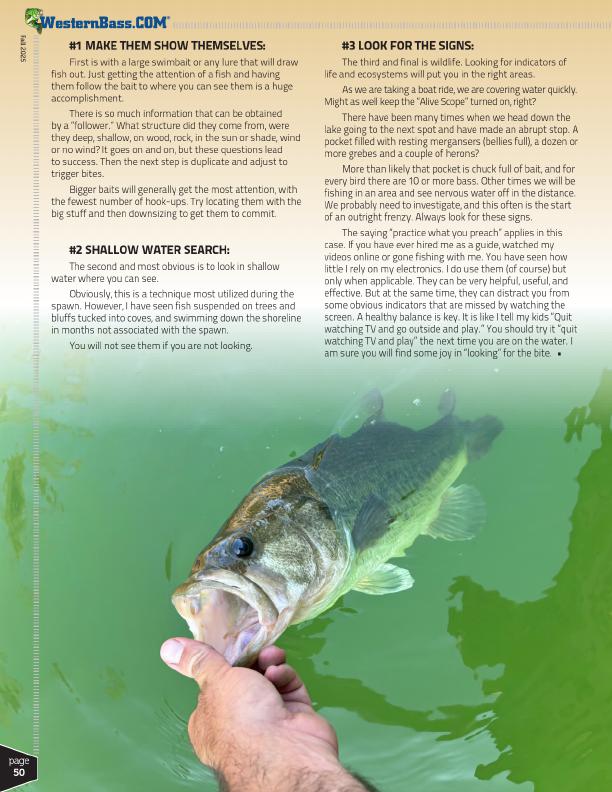
First is with a large swimbait or any lure that will draw fish out. Just getting the attention of a fish and having them follow the bait to where you can see them is a huge accomplishment.
There is so much information that can be obtained by a “follower.” What structure did they come from, were they deep, shallow, on wood, rock, in the sun or shade, wind or no wind? It goes on and on, but these questions lead to success. Then the next step is duplicate and adjust to trigger bites.
Bigger baits will generally get the most attention, with the fewest number of hook-ups. Try locating them with the big stuff and then downsizing to get them to commit.
#2 SHALLOW WATER SEARCH:
The second and most obvious is to look in shallow water where you can see.
Obviously, this is a technique most utilized during the spawn. However, I have seen fish suspended on trees and bluffs tucked into coves, and swimming down the shoreline in months not associated with the spawn.
You will not see them if you are not looking.
#3 LOOK FOR THE SIGNS:
The third and final is wildlife. Looking for indicators of life and ecosystems will put you in the right areas.
As we are taking a boat ride, we are covering water quickly. Might as well keep the “Alive Scope” turned on, right?
There have been many times when we head down the lake going to the next spot and have made an abrupt stop. A pocket filled with resting mergansers (bellies full), a dozen or more grebes and a couple of herons?
More than likely that pocket is chuck full of bait, and for every bird there are 10 or more bass. Other times we will be fishing in an area and see nervous water off in the distance. We probably need to investigate, and this often is the start of an outright frenzy. Always look for these signs.
The saying “practice what you preach” applies in this case. If you have ever hired me as a guide, watched my videos online or gone fishing with me. You have seen how little I rely on my electronics. I do use them (of course) but only when applicable. They can be very helpful, useful, and effective. But at the same time, they can distract you from some obvious indicators that are missed by watching the screen. A healthy balance is key. It is like I tell my kids “Quit watching TV and go outside and play.” You should try it “quit watching TV and play” the next time you are on the water. I am sure you will find some joy in “looking” for the bite. •
page 50